Novartis is paying Abogen Biosciences $575 million upfront for an mRNA-encoded T-cell engager and options on additional RNA programs. The deal highlights how China’s RNA sector is moving beyond vaccines into therapeutic platforms — and raises an important question for South Korea’s emerging mRNA industry.
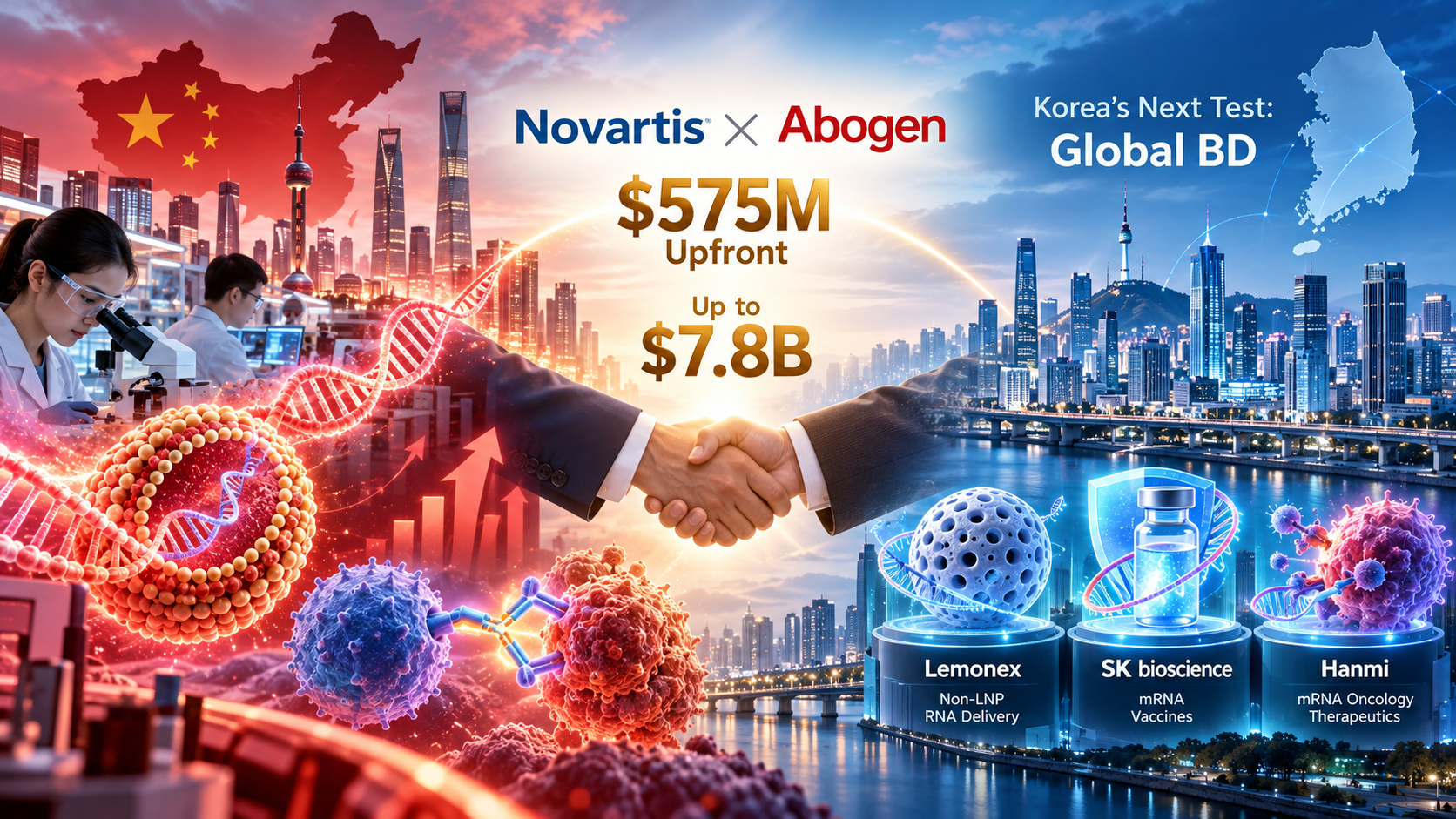
China’s RNA biotechnology sector has delivered another major global pharma transaction. On October 2, Suzhou-based Abogen Biosciences announced a licensing and option agreement with Novartis covering ABO2203, an mRNA-encoded CD19×CD3 T-cell engager, as well as exclusive options on additional programs built from Abogen’s proprietary RNA platform. Abogen will receive $575 million upfront and could receive up to approximately $7.2 billion in development, regulatory and commercial milestones if all options and programs progress successfully, plus potential royalties. The frequently cited “$7.8 billion deal” therefore represents the approximate maximum headline value rather than guaranteed revenue. The size matters, but the technology behind the deal may be even more important.
From mRNA Vaccines to In-Vivo Therapeutic Factories
ABO2203 uses mRNA to instruct the body to produce a CD19×CD3 T-cell engager in vivo. Rather than repeatedly administering a conventionally manufactured recombinant bispecific protein, the therapeutic concept uses RNA as temporary biological instructions for producing the T-cell engager inside the patient. The approach is designed to redirect T cells toward CD19-positive B cells, creating deep B-cell depletion that could potentially be useful in autoimmune diseases. An early Phase 1 study in refractory autoimmune disease is recruiting patients, while ABO2203 has already generated first-in-human oncology data in relapsed or refractory B-cell non-Hodgkin lymphoma. At AACR 2026, Abogen reported preliminary results from nine patients in its dose-escalation study. For Novartis, the strategic value goes beyond one molecule. The agreement also provides options on additional assets from Abogen’s RNA platform. Abogen has built capabilities spanning mRNA design, LNP formulation, automation and GMP manufacturing, while its pipeline includes oncology, autoimmune disease and vaccines. Its lyophilized mRNA shingles vaccine has advanced into Phase 3 development in China. This makes the transaction less like the purchase of a single drug candidate and more like a platform bet.
Why Global Pharma Is Looking Harder at China
The deal also illustrates a broader shift in global pharmaceutical BD. Chinese biotech companies are increasingly offering not only low-cost development capabilities but differentiated clinical assets, platform technologies and manufacturing infrastructure capable of supporting multiple programs. For pharmaceutical companies facing pipeline pressure, this changes the economics of China scouting. A platform capable of producing several therapeutic candidates may be worth substantially more than a single licensed asset because one successful diligence process can potentially open the door to an entire family of programs. The Abogen transaction therefore fits a larger pattern: global pharma is increasingly going to China not simply to sell products, but to source innovation.
Korea Has mRNA Assets of Its Own
South Korea is not absent from this race. Several Korean companies are building differentiated mRNA capabilities, although their technological strategies vary considerably.
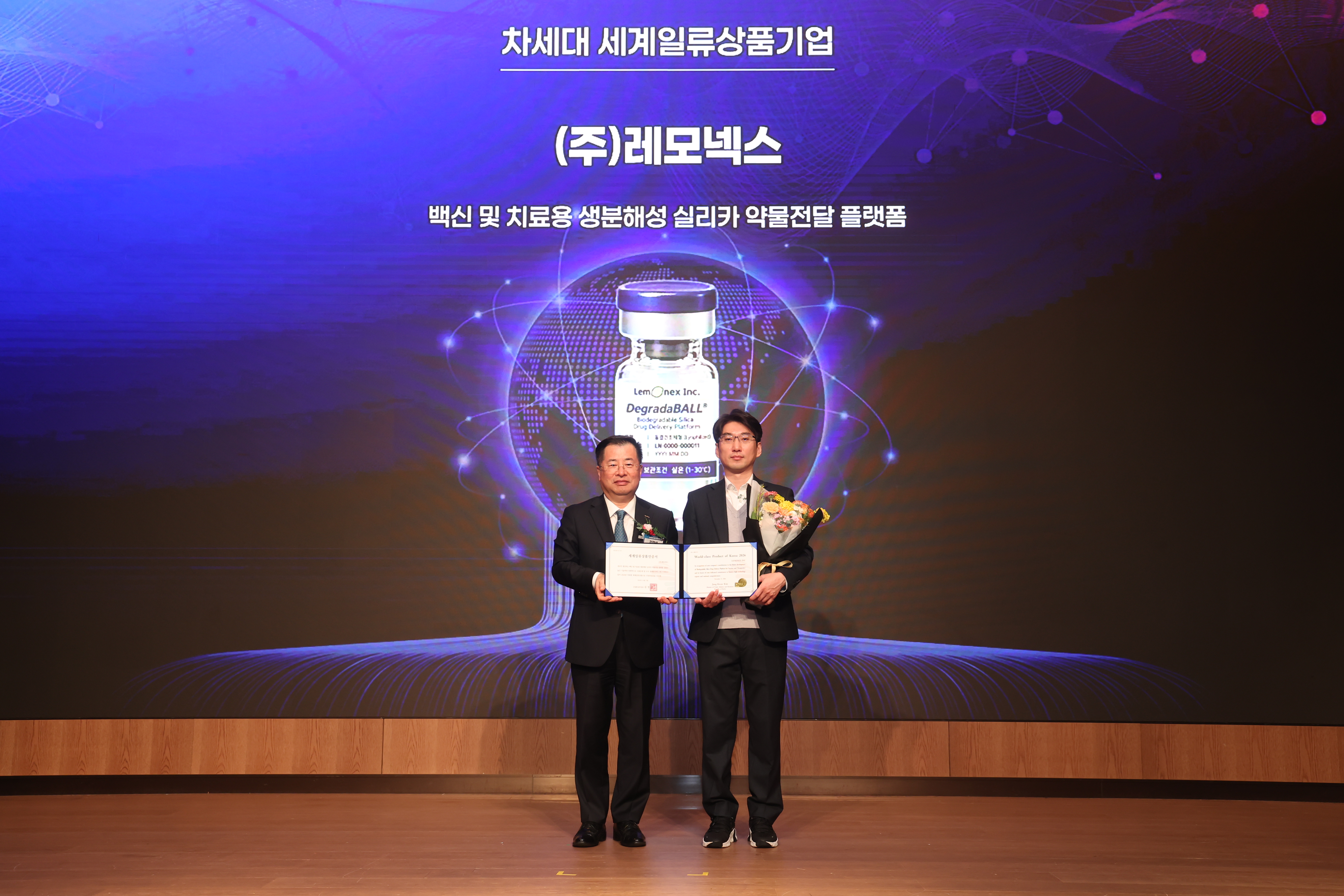
Lemonex has developed DegradaBALL®, a biodegradable porous-silica delivery system positioned as a non-LNP alternative for nucleic-acid delivery. The platform has already been tested in human Phase 1 programs involving both siRNA and mRNA, giving Lemonex clinical experience across two RNA modalities. Its LEM-mR203 program demonstrated the translation of DegradaBALL into an mRNA vaccine application, while the platform is also being explored for longer RNA formats and other biologic payloads.
SK bioscience is taking a vaccine-focused route. Its mRNA Japanese encephalitis vaccine candidate GBP560 entered global Phase 1/2 development in Australia and New Zealand, supported by a broader CEPI partnership designed to build an mRNA platform for rapid pandemic response. CEPI has committed up to $140 million to the program and related platform development.
Hanmi Pharmaceutical, meanwhile, is extending mRNA into oncology. At AACR 2026, Hanmi presented preclinical work on next-generation mRNA programs including a STING mRNA anticancer candidate designed to activate antitumor immunity and a p53 mRNA program aimed at restoring tumor-suppressor expression.
Together, these companies illustrate that Korea already possesses meaningful capabilities across mRNA vaccines, therapeutic RNA and alternative delivery technologies.
The Next Test Is Global BD Conversion
What separates an interesting RNA technology from a globally valuable pharmaceutical platform is increasingly the ability to convert science into repeatable external validation. For BD teams, the key questions are practical: Can the platform work with partner-owned payloads? Is manufacturing scalable? Can it generate differentiated pharmacology? Does it support multiple indications? And can the same technology produce more than one clinically credible asset? For investors, the question is equally direct: Can one platform create multiple shots on goal rather than depend on a single program?
That is what makes the Novartis–Abogen agreement strategically important. The headline may be $7.8 billion. The deeper message is that global pharma is increasingly willing to assign substantial value to RNA platforms capable of generating an entire pipeline, not merely one product.
For Korea’s mRNA sector, the opportunity is already visible. The next challenge is converting scientific and clinical progress into the kind of global BD transactions that can turn domestic platform technologies into internationally scaled businesses.