A personalized mRNA cancer therapy combined with Keytruda has cleared two major Phase 3 hurdles in high-risk melanoma. The result could mark a turning point for cancer vaccines — but important questions remain before patients can receive it.
For decades, the idea sounded almost futuristic: take a piece of a patient’s tumor, decode the mutations unique to that cancer, manufacture a vaccine specifically for that individual, and train the immune system to hunt down any cancer cells left behind. That idea has now crossed one of its most important clinical milestones. Moderna and Merck announced on August 19 that their personalized mRNA cancer therapy, intismeran autogene, also known as V940 or mRNA-4157, met the primary and a key secondary endpoint in a pivotal Phase 3 trial involving patients with high-risk melanoma whose tumors had been completely removed by surgery.
Combined with Merck’s immunotherapy drug Keytruda, or pembrolizumab, the individualized treatment significantly improved recurrence-free survival and distant metastasis-free survival compared with Keytruda alone, according to the companies. It is the first positive Phase 3 result reported for an individualized neoantigen therapy and for an mRNA-based cancer therapy. The announcement has generated excitement among oncologists, patients and investors. CNN has devoted coverage to the scientific implications, while cancer specialists including MD Anderson melanoma expert Hussein Tawbi and oncologist and health-policy expert Ezekiel Emanuel have described the development as potentially important for the future of cancer treatment. Tawbi is also an investigator in the Phase 3 INTerpath-001 program at MD Anderson.
But the phrase “cancer vaccine” can easily create the wrong impression.
This is not a shot that healthy people can currently take to prevent melanoma in the way a measles vaccine prevents infection. It is an investigational, personalized treatment made for individual cancer patients after their tumor has already been diagnosed and surgically removed. Understanding that distinction is essential to understanding why this result matters.
What Exactly Did the Phase 3 Trial Show?
The Phase 3 study, called INTerpath-001, enrolled 1,137 patients with completely resected Stage IIB through Stage IV cutaneous melanoma. Patients were randomly assigned in a 2-to-1 ratio to receive either personalized intismeran plus Keytruda or Keytruda alone. Patients receiving the experimental therapy were given intismeran at 1 mg every three weeks for up to nine doses, along with Keytruda every six weeks for up to nine cycles, for roughly one year. The study’s primary endpoint was recurrence-free survival — essentially, how long patients remained alive without their melanoma returning. A key secondary endpoint measured distant metastasis-free survival, or how long patients remained alive without cancer spreading to distant parts of the body. At a prespecified interim analysis, the combination met both endpoints with what Moderna and Merck described as statistically significant and clinically meaningful improvements compared with Keytruda alone. No new safety signal was identified beyond the previously observed safety profile of the combination. That is the good news. The important caveat is that the companies have not yet publicly released the detailed Phase 3 effect size. We do not yet have the complete hazard ratios, confidence intervals, event counts or overall-survival results from this pivotal trial. Overall survival remains under follow-up, and the companies say detailed data will be presented at an international medical meeting and shared with regulators. That means the Phase 3 result is genuinely important, but it should not yet be translated into claims such as “the vaccine reduces melanoma recurrence by 50%” based on the Phase 3 study. That number comes from an earlier trial.
The Earlier Five-Year Data Explain Why Scientists Were Optimistic
Before INTerpath-001, Moderna and Merck had already generated encouraging results in the smaller randomized Phase 2b KEYNOTE-942 study. At approximately five years of follow-up, intismeran plus Keytruda was associated with a 49% reduction in the risk of recurrence or death compared with Keytruda alone. The combination also showed a 59% reduction in the risk of distant metastasis or death. Those long-term results were particularly important because cancer-vaccine responses need to be durable, not merely temporary. Researchers also reported evidence that the therapy expanded new T-cell populations capable of recognizing tumor-associated neoantigens, supporting the biological mechanism the vaccine was designed to produce. The Phase 3 trial now provides a much larger and more rigorous test of the same concept.
How Can a Vaccine Be Personalized to One Patient?
Traditional vaccines generally expose the immune system to a common antigen shared by a virus or bacterium. Cancer is different. Even two patients with the same diagnosis can have tumors containing different combinations of genetic mutations. Intismeran attempts to exploit those differences. After a patient’s tumor is removed, scientists analyze the tumor’s mutations. Candidate neoantigens — abnormal proteins created by cancer-specific mutations — are identified. A customized synthetic mRNA therapy is then manufactured containing instructions for as many as 34 selected neoantigens from that patient’s tumor. After injection, cells translate those mRNA instructions into neoantigen proteins that can be presented to the immune system. The objective is to generate tumor-specific T cells capable of recognizing cancer cells carrying those mutations. In simple terms, the vaccine is trying to give the immune system a personalized “wanted poster” showing what that patient’s cancer looks like.
Why Add Keytruda?
The vaccine and Keytruda perform different jobs. The personalized vaccine attempts to teach the immune system what to attack. Keytruda helps release one of the immune system’s natural brakes. Keytruda blocks the PD-1 pathway, which tumors can exploit to suppress T-cell activity. Removing that inhibitory signal can help activated immune cells attack cancer more effectively.
The scientific rationale is therefore complementary: Intismeran identifies the target; Keytruda helps the immune system keep attacking it.
That combination may be particularly useful after surgery, when the visible tumor has already been removed but microscopic cancer cells may remain somewhere in the body. Those residual cells are what can eventually cause recurrence.
Is This a Vaccine That Prevents Cancer in Healthy People?
Not this one. The Moderna-Merck melanoma treatment is currently an adjuvant therapeutic cancer vaccine. Patients already have melanoma. Their tumors are removed surgically, and the individualized therapy is then given to reduce the risk that the cancer returns. Preventive cancer vaccines do exist. HPV vaccination, for example, can prevent infections that cause cervical and several other cancers. Researchers are also investigating vaccines that might one day prevent certain tumors before they develop. But those are scientifically and clinically distinct from intismeran.
Could the Technology Work Against Other Cancers?
That is arguably the biggest question raised by the melanoma result. Moderna and Merck already have a broader INTerpath development program comprising multiple Phase 2 and Phase 3 studies across different tumor types, including non-small cell lung cancer, bladder cancer and renal-cell carcinoma. Earlier-stage studies are also investigating individualized neoantigen therapy in settings such as pancreatic, gastric and lung cancers. A positive melanoma study does not prove the technology will work equally well in every tumor type. Cancers differ enormously in mutation burden, immune environment, biological behavior and sensitivity to checkpoint inhibitors. That uncertainty is one reason investors and scientists are now watching the next clinical readouts so closely.
Why Wall Street Reacted So Strongly
The result also transformed the investment narrative surrounding Moderna. The company became globally known for its COVID-19 vaccine, but the collapse in pandemic-era vaccine demand left investors questioning whether its mRNA platform could generate another major commercial franchise. The melanoma result offered the strongest clinical evidence yet that Moderna’s underlying mRNA technology may have applications far beyond infectious-disease vaccination. Moderna’s shares surged dramatically following the announcement, while analysts rapidly revised their assumptions about the value of the cancer pipeline. Barron’s described the program as giving Moderna a new growth story, although Wall Street remains divided over how much future success is already reflected in the stock price. Several firms substantially increased their price targets after the result, but many retained neutral ratings — a useful reminder that a major scientific milestone and an attractive stock valuation are not the same question. For patients, the clinical significance is far more important than the stock-market reaction.
Cancer Vaccines Are Bigger Than mRNA
The Moderna-Merck program is also part of a much broader revival in cancer-vaccine research. A separate example comes from Anixa Biosciences and Cleveland Clinic, which are developing an investigational vaccine for triple-negative breast cancer. That vaccine is not an mRNA vaccine. It targets alpha-lactalbumin, a protein normally associated with lactation that can be abnormally expressed by certain breast cancers. In the completed Phase 1 program, the investigational vaccine met its major primary endpoints and generated protocol-defined immune responses in 74% of participants, while being reported as safe and well tolerated at the maximum tolerated dose. Phase 2 preparations are underway. But here again, interpretation matters. A 74% immune-response rate does not mean the vaccine prevented or cured breast cancer in 74% of patients. Phase 1 trials are primarily designed to evaluate safety, dosing and whether the intended immune response can be generated. Demonstrating that a vaccine actually reduces recurrence or prevents cancer requires larger controlled studies. Anixa is separately developing an ovarian-cancer CAR-T therapy called lira-cel. The company recently reported that four heavily pretreated patients in the early Phase 1 program had survived more than one year following treatment, with the longest observation approaching 28 months. That program is a cell therapy, not a cancer vaccine, and remains early-stage. Together, these programs illustrate how quickly cancer immunotherapy is diversifying.
What Still Has to Happen Before Patients Can Get Intismeran?
The therapy remains investigational. Moderna and Merck plan to present the detailed Phase 3 results and discuss potential regulatory submissions with health authorities. Before widespread clinical use, regulators will need to examine the magnitude of benefit, safety, manufacturing reliability, quality control and the overall risk-benefit profile. Personalized manufacturing also creates challenges that conventional medicines do not face. Every patient’s therapy must be generated from that individual’s tumor information. That raises practical questions about how quickly tumors can be sequenced, neoantigens selected, customized mRNA manufactured, quality-tested and delivered back to hospitals. Cost and reimbursement could become equally important. A therapy can be scientifically transformative and still have limited public-health impact if manufacturing takes too long or access is restricted to a small number of patients.
What Patients Should Know Right Now
For patients with melanoma, this news is encouraging — but it does not change treatment decisions overnight. Keytruda and other approved melanoma therapies remain established standards of care. Intismeran is not yet an FDA-approved treatment, and patients should not delay or change current therapy while waiting for the experimental vaccine. People with high-risk melanoma who are interested in individualized cancer vaccines can discuss ongoing clinical trials with their oncology teams. And perhaps most importantly, patients should understand that mRNA itself is not the cancer treatment target. It is an information-delivery technology being used to instruct the immune system to recognize tumor-specific targets. The COVID-19 pandemic introduced billions of people to mRNA technology. Cancer may prove to be one of its most consequential next chapters.
The Bottom Line
The Moderna-Merck Phase 3 result deserves attention. It is the first reported positive Phase 3 readout for an individualized neoantigen therapy and an mRNA-based cancer treatment, and it strengthens years of evidence suggesting that personalized cancer vaccines can work alongside checkpoint immunotherapy. But science advances by details, not headlines. The full Phase 3 data still need to show how large the benefit is, how durable it remains, what the safety profile looks like in detail and whether overall survival ultimately improves. Regulatory review must follow. Manufacturing and access must be solved. And results in melanoma must be reproduced in other cancers before anyone can speak of a universal cancer-vaccine platform. Still, the direction of travel is becoming clearer. The central question surrounding personalized cancer vaccines may be shifting from “Can this idea work?” to the more practical questions of “For which cancers, for which patients, and how quickly can we make it available?” That is a meaningful change — and potentially the beginning of a new era in personalized cancer immunotherapy.
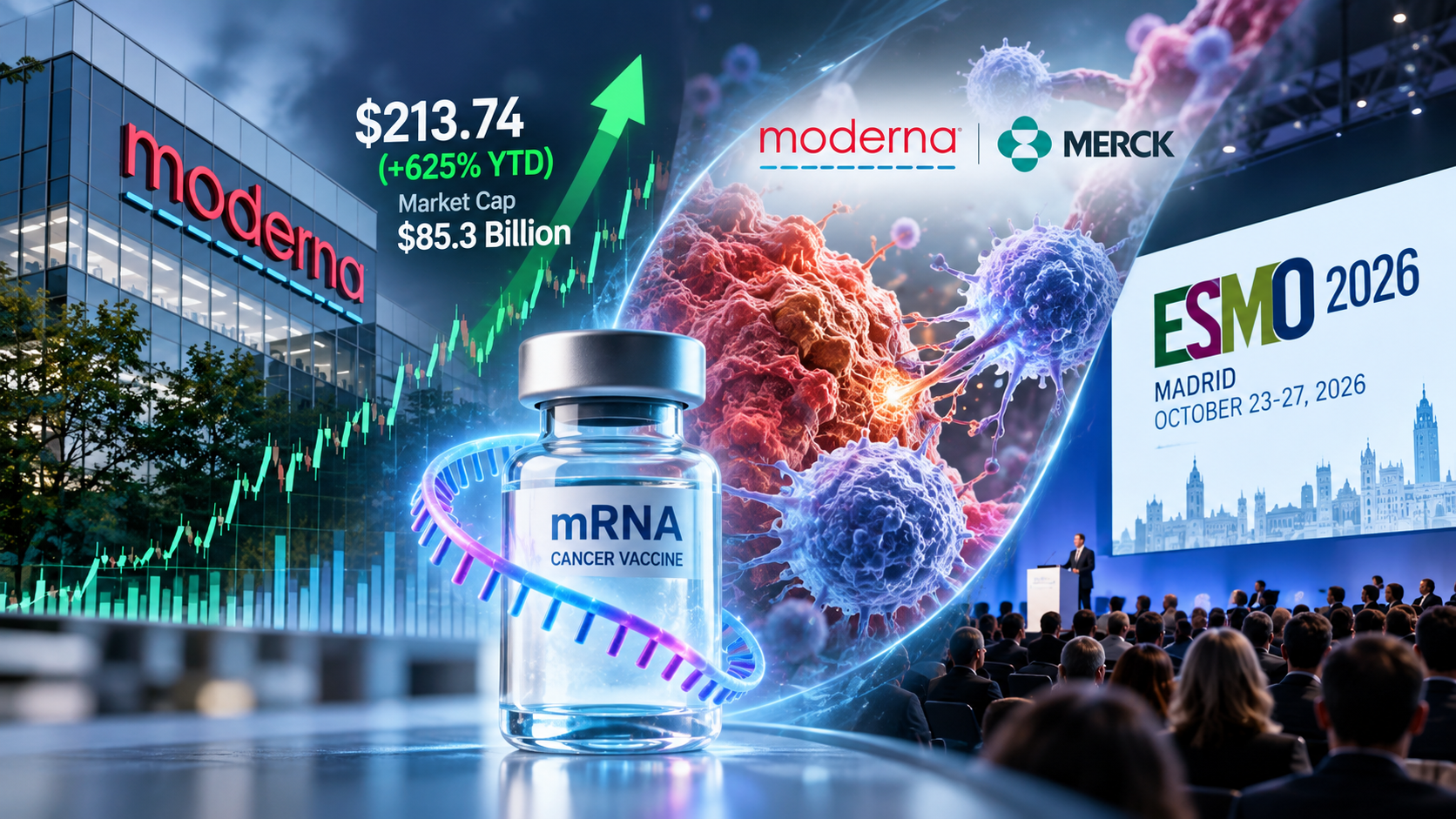
*The lead image at the top of this article illustrates how a personalized mRNA cancer therapy works and summarizes the key Phase 3 findings from Moderna and Merck’s melanoma program combining intismeran autogene (V940/mRNA-4157) with Keytruda. The lead image was generated using generative AI with ChatGPT.