Cesarean section has become one of the most common major surgical procedures performed worldwide. For millions of women, it is a life-saving intervention that protects the mother, the baby, or both. But as cesarean delivery becomes increasingly common, another issue is attracting greater medical attention: the scar that remains long after childbirth is over. For many women, a cesarean incision heals into a relatively flat line. For others, however, excessive wound-healing responses can lead to a raised, red, itchy or painful hypertrophic scar — or, less commonly, a keloid that grows beyond the original wound boundary. These scars have traditionally been treated as a cosmetic inconvenience. Growing evidence suggests that this view may be too narrow.
Hypertrophic scars can affect pain, itching, physical comfort, clothing choices, body image and quality of life. In some women, the psychological impact may persist long after the immediate postpartum period. As cesarean delivery rates continue to rise in South Korea, China, the United States and many other countries, abnormal postsurgical scarring may increasingly become a broader women’s health and healthcare-cost issue.
Cesarean Delivery Is Becoming Structurally More Common
The rise in cesarean delivery is a global phenomenon, although rates vary substantially between countries. The World Health Organization has reported that cesarean sections accounted for roughly 21% of births worldwide by the late 2010s, compared with about 6% in 1990. If current trends continue, the global rate could approach 30% by 2030. South Korea stands out particularly sharply. According to Korean national statistics, the country’s cesarean delivery rate increased from 39.6% in 2015 to 66.9% in 2024. Among mothers aged 40–49, the rate reached approximately 78% in 2024. That means cesarean delivery now accounts for roughly two out of every three births recorded in Korea. China also has a high cesarean burden. Large nationwide analyses have placed the rate above 40% in recent years. In the United States, 32.4% of deliveries were by cesarean section in 2024, representing more than 1.17 million births. Europe shows greater variation. Recent comparative data have shown national rates ranging from below 20% to above 50%, reflecting major differences in obstetric practices and healthcare systems. It would be misleading, however, to explain these trends simply by saying that more women are “choosing” cesarean delivery. Advanced maternal age, previous cesarean delivery, multiple pregnancy, fetal or maternal medical conditions, obstetric risk management, healthcare-system practices and maternal preference can all contribute. The broader conclusion is more important: Cesarean delivery has become structurally more common in modern obstetric care. And every cesarean creates a surgical wound that must heal.
When Normal Healing Becomes Fibrosis
Normal wound healing is a tightly regulated biological process. After tissue injury, inflammation begins. Fibroblasts migrate into the wound, extracellular matrix is produced and collagen helps restore tissue strength. Over time, collagen production and degradation move toward equilibrium and the scar matures. In hypertrophic scarring, that balance is disturbed. Fibroblasts remain excessively active, extracellular matrix accumulates and collagen deposition becomes excessive. The result is a raised and often firm scar that generally remains within the boundary of the original wound. Keloids behave differently. They can extend beyond the original injury and invade surrounding normal skin. Both conditions can produce redness, itching, pain, tenderness and discomfort. For a woman recovering from childbirth, these symptoms may coexist with breastfeeding, sleep deprivation, infant care and the broader physical recovery that follows pregnancy and delivery. That context matters. A postoperative scar in a postpartum woman is not necessarily equivalent to a scar occurring after an elective cosmetic procedure.
A Recent Japanese Study Raises an Important Question
One of the most notable recent studies examined 991 Japanese women aged 18 to 45, six to 18 months after cesarean delivery. Researchers reported abnormal scars in 66.0% of participants. According to the study’s classification, 64.4% had hypertrophic scars and 1.6% had keloids. The number should be interpreted cautiously. It does not mean that two-thirds of all women worldwide who undergo cesarean delivery will develop clinically significant hypertrophic scars. The study used an internet-based cross-sectional survey and relied on participant-reported assessments, which can affect generalizability. Earlier smaller studies have reported lower prevalence estimates. But the more important finding was not simply the percentage. Women with abnormal scars reported poorer dermatology-related quality of life, particularly in symptom and emotional domains. Women classified as having keloids also showed higher scores on measures associated with postpartum anxiety and depression. Other studies have similarly suggested that dissatisfaction with cesarean scars can affect self-care, interpersonal relationships and body image.
The implication is increasingly difficult to ignore: The cesarean scar may be a medical and psychosocial issue, not merely a cosmetic one.
Asia May Have Particular Relevance
Abnormal scar formation is influenced by multiple factors, including genetic predisposition, skin characteristics, inflammation, wound tension and individual healing responses. Keloids and hypertrophic scars have historically been reported more frequently in people with certain darker skin phototypes and in some Asian populations. At the same time, countries including South Korea and China have some of the world’s highest cesarean delivery rates. The combination of high surgical exposure and susceptibility to abnormal scarring could therefore make East Asia an important region for both clinical research and future treatment demand. South Korea may be especially relevant. The country combines a very high cesarean rate, an aging maternal population, advanced dermatology and aesthetic-treatment infrastructure, and high consumer awareness of postoperative scar management. These factors could create a healthcare market that sits at the intersection of obstetrics, dermatology, women’s health and regenerative medicine.
The Economic Burden Is Driven by Repeated Treatment
The cost of hypertrophic scars is difficult to reduce to a single figure. Some mild scars require little or no active treatment. Others require months of silicone products, repeated corticosteroid injections, multiple laser sessions or combination therapy. More severe keloids may require surgical revision followed by additional treatment designed to reduce recurrence. The financial burden therefore comes not only from a single medical procedure, but from repetition.
Potential costs include:
- repeated outpatient visits;
- prescription or over-the-counter scar products;
- corticosteroid injections;
- laser procedures;
- surgical revision;
- transportation and time away from work;
- childcare arrangements during treatment;
- and long-term follow-up for recurrent scars.
Many aesthetic or scar-management procedures are also only partially reimbursed or paid out of pocket. An interesting signal has already emerged from South Korea’s insurance industry. In 2024, Hanwha General Insurance introduced coverage related to hypertrophic scars, including keloids, occurring within two years after cesarean delivery or thyroid surgery. An individual insurance product does not establish the national disease burden. But it does indicate that postoperative scarring is increasingly being recognized as a distinct health risk with measurable economic consequences.
Current Treatments Work — But They Are Not Perfect
Modern scar management has several established tools.
Silicone Gel and Silicone Sheets
Silicone-based products are among the most commonly recommended non-invasive treatments for hypertrophic scars. They can help maintain hydration and may reduce scar thickness, redness and discomfort in some patients. Their advantages are obvious: they are non-invasive and generally well tolerated. But treatment often requires prolonged daily use. Compliance can be difficult, especially for postpartum women caring for newborns, and established scars may respond incompletely. Clinical evidence supports some benefit, but the magnitude of effect varies and the certainty of evidence is not uniformly strong across studies.
Corticosteroid Injections
Intralesional corticosteroids, particularly triamcinolone, are widely used for hypertrophic scars and keloids. They can suppress inflammation, reduce fibroblast activity and inhibit collagen synthesis. However, injections may be painful and often need to be repeated.
Local adverse effects can include:
- skin atrophy;
- telangiectasia;
- pigment changes;
- local tissue thinning;
- and injection-site discomfort.
Recurrence can also occur after treatment is stopped.
Laser Therapy
Laser treatment can target redness, vascularity, scar thickness and collagen remodeling. Pulsed-dye lasers and fractional lasers are frequently used, sometimes in combination with steroid injections or other therapies. But laser treatment can require multiple sessions and substantial out-of-pocket expense. It is therefore often better understood as part of a multimodal treatment strategy rather than a universal cure.
Surgical Revision
For severe scars, surgical excision or revision may be considered. But surgery creates a new wound. For patients predisposed to hypertrophic scars or keloids, that introduces an obvious paradox: treatment itself can trigger another abnormal scar. Additional preventive therapy may therefore be required after surgery.
Breastfeeding Adds Another Layer of Complexity
Postpartum scar treatment introduces a clinical consideration that does not apply to many other surgical populations: breastfeeding. This issue requires careful interpretation. Local corticosteroid injections should not automatically be described as dangerous to breastfed infants. Available reference data generally do not suggest meaningful risk to infants after localized triamcinolone treatment. However, medium-to-high systemic corticosteroid exposure has occasionally been associated with temporary reductions in milk production. The key issue is therefore not that established treatments are inherently unsafe.
Rather, postpartum medicine creates a strong incentive to develop therapies that combine: high local activity, low systemic exposure, minimal treatment burden and suitability for repeated use. That goal is becoming increasingly relevant as cesarean rates rise.
A Treatment Paradigm Still Focused on the Finished Scar
Most conventional approaches have one thing in common. They treat the scar after the fibrotic process has already begun.
- Silicone attempts to improve the local healing environment.
- Steroids broadly suppress inflammation and collagen production.
- Lasers remodel vascularity and scar tissue.
- Surgery physically removes the abnormal tissue.
These treatments can be useful, and they will remain important components of clinical practice. But they do not necessarily address the underlying molecular signals with high specificity. That distinction may define the next generation of scar therapeutics. Researchers are increasingly investigating whether excessive fibrosis can be controlled by targeting the genes and signaling pathways that drive fibroblast activation and collagen deposition.
Among the most intriguing technologies is small interfering RNA, or siRNA. Instead of simply flattening, burning, injecting or cutting away an established scar, siRNA may make it possible to reduce expression of a specific molecular driver of fibrosis. One of the most intensively studied targets is connective tissue growth factor, or CTGF/CCN2. And several RNA-based programs have already moved beyond laboratory experiments and into human clinical trials.
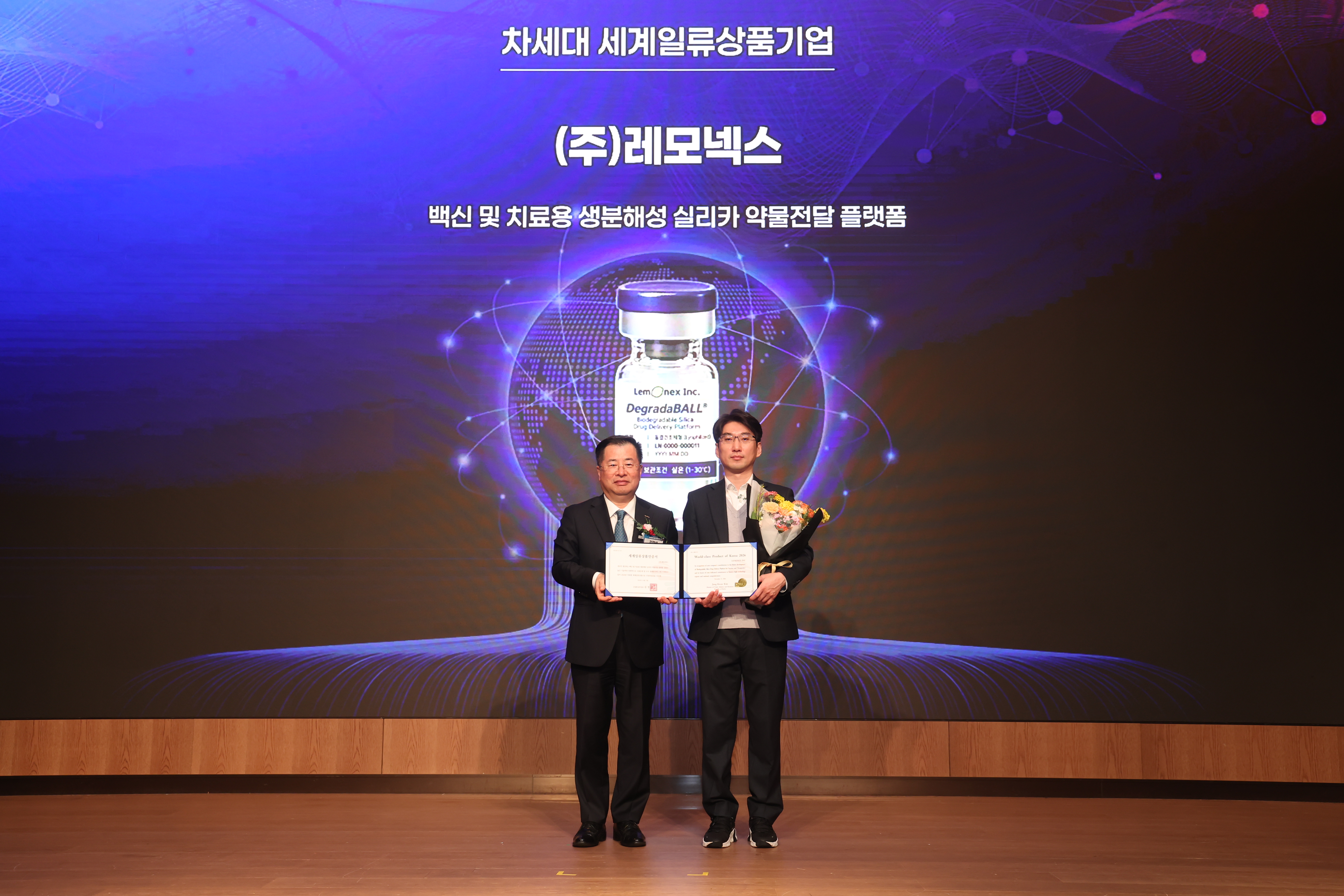
In Part 2, CWON Press examines the emerging race to develop siRNA therapies for hypertrophic scars, why drug delivery may determine which approach succeeds, and how Lemonex’s LEM-S401 is attempting to differentiate itself through microgram-level dosing, low systemic exposure and the DegradaBALL drug-delivery platform.
*The lead image at the top of this article illustrates the growing medical and psychosocial significance of cesarean scars, highlighting the differences between normal, hypertrophic and keloid scarring, rising C-section rates and the importance of early scar management in postpartum recovery. The lead image was generated using generative AI with ChatGPT.