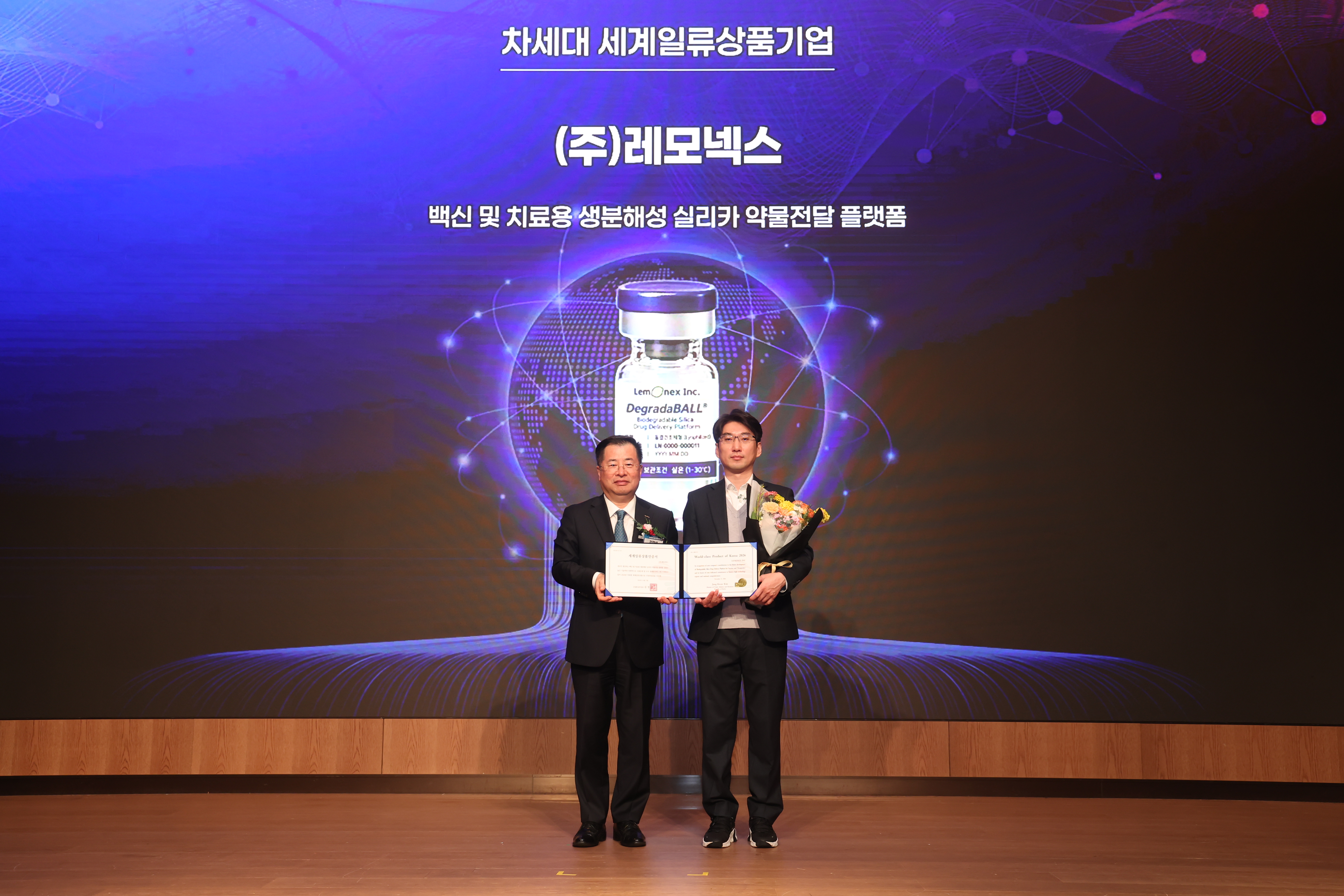
As RNA therapeutics expand beyond vaccines, delivery is becoming one of the industry’s most important competitive battlegrounds. South Korea’s Lemonex is positioning DegradaBALL® as a biodegradable porous-silica platform with human clinical experience across both siRNA and mRNA — and a potentially broader partnering opportunity beyond RNA.
RNA therapeutics are moving into a new phase. The first wave proved that RNA could become medicine. The next challenge is increasingly about where, how and for how long those molecules can be delivered.
Lipid nanoparticles remain the dominant technology behind mRNA vaccines and several nucleic-acid applications, but the industry is actively exploring additional delivery architectures as RNA expands toward oncology, immunology, rare diseases and other therapeutic areas. Recent scientific reviews continue to identify tissue targeting, biodistribution, stability, endosomal escape and scalable manufacturing as central challenges for next-generation RNA delivery. That makes alternative delivery platforms strategically relevant — particularly those that have already moved beyond laboratory proof-of-concept.
What Makes DegradaBALL Different?
Lemonex’s DegradaBALL is built around a biodegradable porous-silica architecture rather than a conventional lipid nanoparticle. The platform has been developed for multiple payload classes, including mRNA, siRNA, self-amplifying RNA, peptides, proteins and cytokines.
For pharmaceutical companies, the broader proposition is not simply another RNA carrier. It is the possibility of pairing an existing proprietary therapeutic molecule with a different delivery architecture to create a differentiated product. That distinction matters. Global pharma does not necessarily need another company to discover its RNA sequence or therapeutic protein. It may need a delivery partner capable of improving formulation, administration, localization, stability or pharmacokinetic behavior while allowing the pharma company to retain control of its underlying asset.
The Key Signal for BD: Human Translation
The delivery field contains many technologies supported by compelling in vitro or animal studies. Far fewer have been manufactured, taken through regulatory processes and administered to humans. This is where Lemonex has a potentially meaningful differentiation.
DegradaBALL has entered human clinical development through LEM-S401, a siRNA program targeting CTGF, and LEM-mR203, an mRNA program, with Phase 1 experience generated across two different RNA modalities.
For a pharmaceutical BD or Search & Evaluation team, this changes the starting point of diligence. The question moves from “Can this material theoretically deliver RNA?” toward the more practical question: “Can this platform be adapted to our molecule and development strategy?”
Human exposure does not remove platform risk, and each new payload will still require its own development work. But clinical translation can materially distinguish a platform from technologies that remain entirely preclinical.
Why the Platform Model Matters
From an investment perspective, DegradaBALL also presents a different proposition from a conventional single-asset biotech. A single-asset company can create enormous value, but its economics are heavily dependent on one clinical program. A reusable delivery technology potentially creates value across multiple partner-owned assets, modalities and indications.
Lemonex has also developed the carrier with a modular manufacturing concept in which the delivery material can be produced separately from the therapeutic payload. That could be relevant for partners that want to retain manufacturing control over proprietary RNA or biologics while accessing an external carrier and formulation know-how. Its work with CEPI and experience in lyophilized formulations add another layer of development history around CMC, stability and practical deployment — issues that increasingly matter once a delivery technology moves from scientific interest toward pharmaceutical adoption.
The Opportunity Extends Beyond RNA
DegradaBALL’s commercial optionality may also extend beyond nucleic acids. Lemonex has investigated the platform with proteins and cytokines, including its BALLkine-2 program using recombinant IL-2. That broader capability matters because the drug-delivery problem is not unique to RNA. Many biologically powerful molecules face limitations related to systemic exposure, pharmacokinetics, dosing or localization. If one material architecture can be adapted across several therapeutic classes, each successful development program potentially generates additional validation for the underlying platform.
What Global Pharma and Investors Should Watch Next
The next stage will be about partner-driven validation. For BD teams, the important questions are likely to include how DegradaBALL performs with externally owned payloads, which administration routes and therapeutic settings offer the strongest differentiation, and how easily the platform can be incorporated into existing pharmaceutical CMC and manufacturing systems.
For investors, the key question is whether Lemonex can convert its clinical and manufacturing experience into multiple independent collaborations, reducing dependence on the success of any single internal asset. RNA delivery is unlikely to become a winner-takes-all market. Different tissues, payloads and therapeutic objectives may require different delivery solutions. That could create room for clinically translated non-LNP technologies with distinct material properties.
DegradaBALL’s opportunity is therefore not to replace LNPs everywhere. It is to establish where a different delivery architecture can create enough pharmaceutical value that a partner wants to use it. For Lemonex, that is increasingly the commercial question that matters.
*This image illustrates DegradaBALL®, Lemonex’s biodegradable porous-silica drug-delivery platform, as a modular carrier for multiple therapeutic payloads, including RNA and biologic molecules. The visual highlights the platform’s multi-payload potential, its progression into human clinical development, and its broader partnering opportunity for pharmaceutical companies seeking differentiated delivery technologies beyond conventional lipid nanoparticles. This image was generated using generative AI with ChatGPT.